Renewables: Resilient Income and Energy Security
5 June 2026
Two powerful forces are converging: the urgent pursuit of energy security and a structural increase in electricity demand that will play out over the coming decades, making the underlying investment case for UK & European renewable energy infrastructure clear.
A supportive macro environment provides a strong foundation, but what differentiates the leading renewables investment companies, like The Renewables Infrastructure Group (TRIG), is how their portfolios are structured and managed.
The energy security and demand backdrop
Russia’s invasion of Ukraine laid bare the cost for societies that are dependent on imported fossil fuels. Disruptions in the supply of natural gas and the resulting price spikes translated directly into higher energy costs, squeezing households and jeopardising economic growth. The recent escalation of conflict in the Middle East has only amplified the urgency of the changes needed. But energy security is not a problem that can be solved overnight. It requires sustained investment in domestically generated electricity and supporting infrastructure that can meet demand at scale — precisely what renewable energy infrastructure delivers.
Both the UK and the EU have turned energy security ambitions into policy frameworks. The UK Government’s Clean Power 2030 Action Plan targets 100% of electricity demand to be met by clean sources by the end of this decade, with at least 95% of generation from low-carbon sources[1]. These are backed by efforts to deliver planning reform, grid connection reform and new contracting mechanisms to accelerate project delivery.
In Europe, the revised Renewable Energy Directive has raised the binding target to at least 42.5% of energy consumption from renewable sources by 2030.[2] The REPowerEU plan is mobilising over €210 billion of additional public and private investment, including into supply diversification and accelerated renewables deployment. For owners and operators of renewable energy assets, this represents a deep and widening pool of policy support in both the UK and Europe.
At the same time, energy demand is growing. The electrification of transport and heating and the substantial build out of data centres are all driving electricity consumption materially higher. Data centres alone now account for around 6% of UK electricity supply,[3] up from an estimated 2.5% just eighteen months ago.[4] It is forecast that UK data centre electricity demand could grow fourfold by 2030.[5] Across Europe, the picture is similar: data consumption and AI-driven workloads are scaling rapidly.
It is not just governments seeking energy security. Across Europe, corporate buyers contracted over 9GW of renewable energy through power purchase agreements (PPAs) in 2025,[6] with demand being led by telecommunication companies, consumer goods firms and transport operators. For asset owners with strong commercial teams, this represents a significant opportunity to lock in long-term, fixed-price revenues.
This demand backdrop may not be a short term cycle, but instead has the potential to be a structural shift that will underpin the need for new renewable generation capacity for years to come.

Why TRIG is ideally positioned
TRIG seeks to position itself at the nexus of the energy transition and investors’ desire for attractive total returns underpinned by resilient income. The Company’s active management strategy is essential to delivering for investors, seeking to enhance the long-term resilience of shareholder returns in three ways:
- A balanced portfolio: Diversifying across geographies and technologies
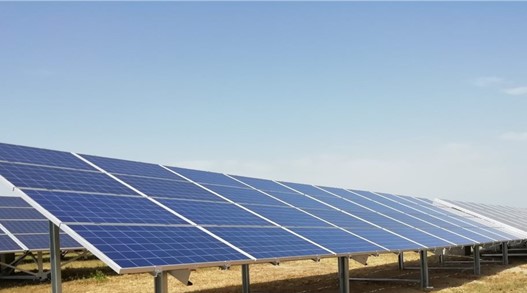
A portfolio spread across wind, solar and battery storage — and across multiple geographies — provides natural resilience. Different technologies, power markets, public policy environments and weather patterns complement each other, smoothing revenue profiles and reducing concentration risk. TRIG’s 2.3GW spans the UK, France, Spain, Germany and Sweden, generating clean electricity equivalent to that consumed by 1.6 million homes.
- Responsible Investment: Disciplined investment and balance sheet strength
Renewable energy assets are long-duration, and the companies that own them must be structured to endure periods of lower power prices, higher interest rates or weaker generation. Conservative gearing, fixed interest rate project level debt that is repaid within the term of revenue contracts, and the resulting low refinancing risk are hallmarks of TRIG’s portfolio, providing the foundation of its resilience.
A conservative balance sheet also provides long-term optionality and flexibility. Between 2026 and 2030, the portfolio is projected to generate c. £2bn of operational cash flows, which would repay £1bn of debt, pay £850m in dividends at the current dividend level and deliver £150 million of surplus cash.[7] TRIG’s self-funding set-up matters. As the revenue mix evolves over time, TRIG has the balance sheet flexibility to adapt.
Knowing when to invest, when to divest and when to return capital to shareholders is reflective of a disciplined strategy. TRIG’s Board has set out a clear framework for the next twelve months: £400 million to be realised from a combination of disposals and modest debt issuance, with proceeds deployed into share buybacks, debt reduction and higher-returning internal investment opportunities.
- Operational excellence: Optimising the portfolio
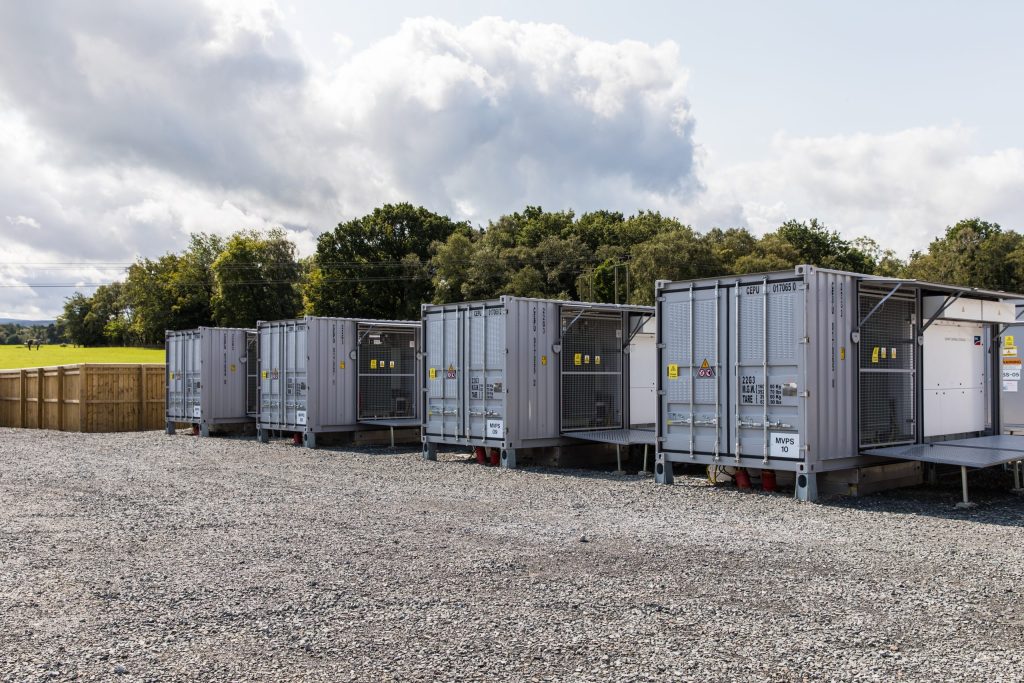
Actively managing both the individual assets and the portfolio as a whole is a key value lever. Included within this is TRIG’s proprietary development pipelines, which offer the potential for higher returns, extends the average life of the portfolio and can enhance diversification. TRIG’s 900MW development pipeline, with over 200MW currently under construction including battery storage and onshore wind repowering, is a tangible example of this approach in action.
For operational projects, securing fixed-price revenue streams both supports cash flow visibility and manages risk. Over the next ten years, over 65% of TRIG’s revenues are fixed-price per MWh generated and 55% of revenues are directly linked to inflation indices, illustrating the core infrastructure income characteristics of the sector.
The ability to source new corporate offtake agreements, also known as power purchase agreements, is increasingly important as government support regimes mature and a greater proportion of revenues become merchant. In October 2025, TRIG signed a 10-year corporate PPA with Virgin Media O2, to supply 15% of its total GB electricity needs at a fixed price from two of our onshore wind farms. This is one of five new offtake agreements that TRIG has secured with corporate counterparties in recent years.
An attractive investment proposition
For investors seeking resilient income, TRIG offers a distinctive proposition with a dividend that is underpinned by a diversified portfolio of renewables infrastructure assets.
With energy security and electrification driving sustained demand for new renewable capacity, and a supportive policy environment across the UK and Europe providing the framework for deployment, the outlook for well-managed renewable energy portfolios is compelling. The tailwinds are structural, the income is resilient, and the opportunity set is growing.
Important information
This article has been issued by The Renewables Infrastructure Group Limited “TRIG”. It has been prepared and approved by InfraRed Capital Partners Limited (“InfraRed”) in conjunction with TRIG. This article has been approved as a financial promotion by InfraRed, which is solely responsible for its compliance with applicable UK regulatory requirements in the Financial Conduct Authority’s Handbook. Although InfraRed and TRIG have attempted to ensure that the contents of this document are accurate in all material respects, no representation or warranty, express or implied, is made to, and no reliance should be placed on the fairness, accuracy, completeness or correctness of the information, or opinions contained herein. This article is being distributed to and is directed only at persons who fall within the end ‘target market’ for shares in TRIG (the details of which can be found in the section titled ‘Information for Distributors’ on TRIG’s Consumer Duty webpage). If you do not fall within the end target market for shares in TRIG, you should not treat this article as being distributed to or directed at you. This article is not and should not be construed as an offer to sell or the solicitation of an offer to purchase or subscribe for any investment. The article is intended for information purposes only and does not constitute investment advice. Past performance is not a guide to future performance. The value of any investment or the income deriving from them may go down as well as up and you may not get back the full amount invested. There are no guarantees that dividend and return targets will be met. An investment in TRIG will involve certain risks. There can be no assurance that TRIG will achieve comparable results to those contained in this document, that any targets will be met or that TRIG will be able to implement its investment strategy.
[1] Source: https://commonslibrary.parliament.uk/research-briefings/cbp-10182/
[2] Source: https://energy.ec.europa.eu/topics/renewable-energy/renewable-energy-directive-targets-and-rules/renewable-energy-targets_en
[3] Source: https://www.theguardian.com/technology/2026/may/13/datacentres-electricity-consumption-uk-us-ai
[4] Source: https://hansard.parliament.uk/Lords/2025-01-27/debates/7D94F44D-EA1F-4D0F-87A8-2B5BCFD00DEF/InternetActivityEnergyUse
[5] Source: https://www.neso.energy/document/346651/download
[6] Source: https://www.trioadvisory.com/insights/european-ppa-market-corporate-buyers-cee
[7] Source: TRIG 2026 Capital Markets Seminar